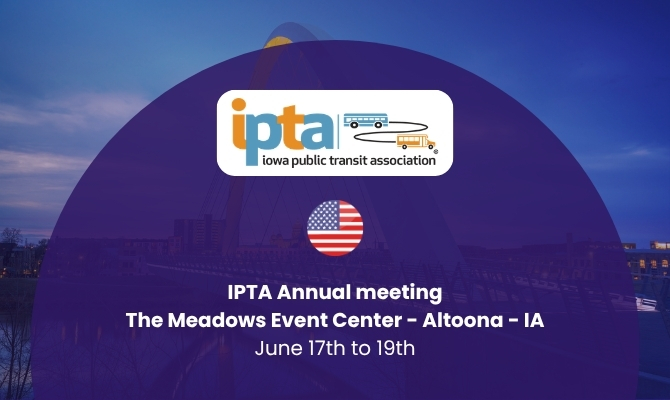
Matawan to showcase cloud-native transit SaaS at IPTA Iowa 2026
Share
Matawan, a global leader in mobility Software-as-a-Service (SaaS), today announced its participation in the 2026 IPTA Annual Meeting & Training Conference, held from June 17–19, 2026, at The Meadows Event Center in Altoona, Iowa.
As Midwestern transit agencies face shifting regulations and tighter budgets, Matawan will demonstrate how its cloud-native architecture helps transit authorities modernize fare collection and optimize regional networks without heavy upfront infrastructure costs.
Simplifying regional fare systems with WanFare and WanPay
Traditional legacy fareboxes are expensive to maintain and create data silos. Matawan bridges this gap by shifting transit intelligence to a secure cloud ecosystem.
Through its core solutions, WanFare and WanPay, Matawan enables transit leaders, managers, and administrators to orchestrate Account-Based Ticketing (ABT), open payments (contactless EMV), and cash handling within a single, unified interface. This approach streamlines day-to-day operations for multiple staff positions, from dispatchers to mobility coordinators, without disrupting existing workflows.
Unified tech for fixed-route, microtransit, and school transport
Matawan’s flexible SaaS platform allows modern transit networks to manage disparate transit modes from one central dashboard:
School transportation: specialized configurations ensuring safe, compliant, and traceable transit options for youth networks.
Proven public transit expertise
Matawan brings field-tested technology to Iowa, backed by concrete operational data:
Partner Networks: 300+ public transit networks optimized globally
Annual Volume: 109M+ secure fare validations processed annually
U.S. Footprint: active deployments in Evansville (METS) and Conroe, finalist in the New York Transit Tech Lab., Sourcewell contract
Compliance: fully aligned with ADA accessibility and strict data security protocols
Meet Matawan in Altoona
Attendees at the 2026 IPTA Annual Meeting are invited to connect with Matawan’s transit experts for short, 15-minute practical demonstrations. Discover how to move your agency away from fragmented legacy hardware and toward a connected, resilient transit ecosystem.