The Modern Transit Paradox: why having more data isn’t solving transit’s biggest challenges
Share
Public transit agencies are under pressure to do more with data than ever before, creating a Data Paradox: agencies are data-rich, but insight-constrained. In fact, an average of 68% of available enterprise data goes completely unused (Seagate/IDC).
The 3 Friction Points Agencies Face
Multiple Stakeholder Interests: Riders want seamless experiences, agencies and cities want smarter planning, and leadership needs real-time visibility into operations and revenue—all while cutting costs and increasing ridership.
Siloed Data & Limited Visibility: An agency may know how many passengers tapped in at 8:02 AM, but without a robust Origin/Destination ($O/D$) matrix, they remain blind to where riders actually go.
Privacy & Security Scrutiny: Centralizing feeds introduces cyber risks alongside strict regulations like CCPA and GDPR regarding how personal data is collected, stored, and used.
Unlocking Transit Intelligence Without “Rip-and-Replace”
Agencies do not need costly, years-long hardware replacements to solve this. The future of transit lies in the data already collected.
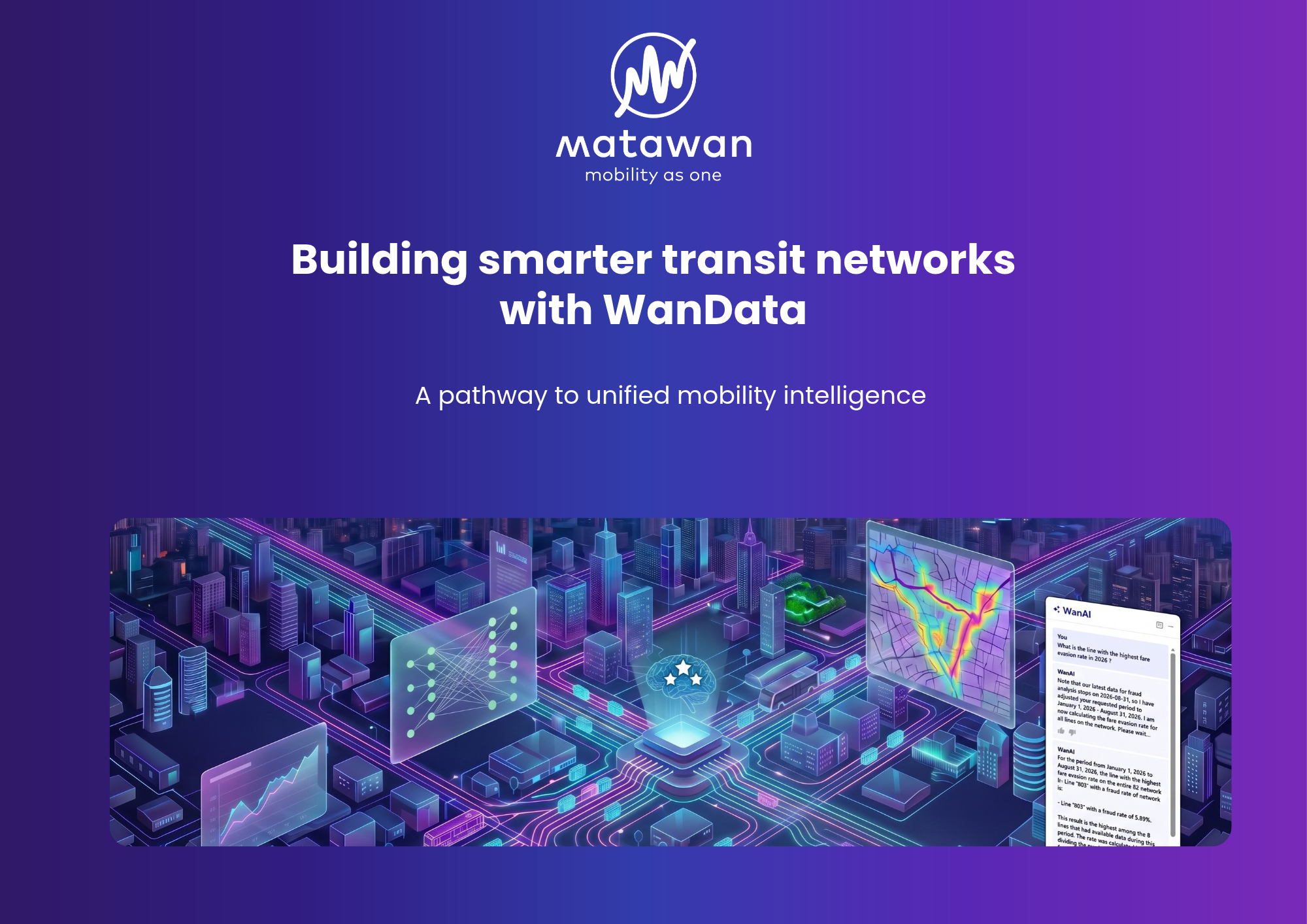
Through WanData, an AI-powered mobility intelligence platform, fragmented operational data turns into decision-ready insights:
Data-Agnostic Integration: Ingests fareboxes, ABT, APC, CCTV, GTFS/GTFS-RT, and CAD/AVL feeds into a single platform—with no rip-and-replace.
Journey Reconstruction: Identifies destination probabilities and reconstructs end-to-end passenger trips using entry tap-ins, historical patterns, and real-time load factors.
Conversational AI (WanAI): Empowers any team to query network efficiency, underperforming lines, and fraud rates in plain language—without technical data skills or waiting on IT.
Privacy-First Architecture: Hashes personally identifiable information (PII) before analysis begins and applies differential privacy to protect low-density rider identities.