In the world of high-capacity transit, data is the only currency that matters. Yet, for many of the world’s busiest networks, a massive “data leak” exists at the exit gate.
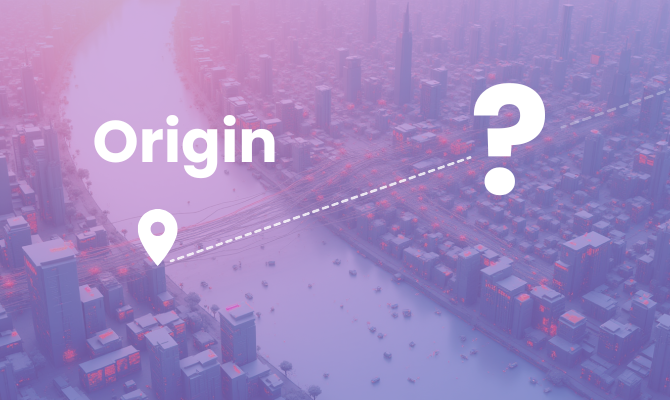
For the Port Authority Trans-Hudson (PATH) the vital artery connecting New Jersey’s commuters to the heart of Manhattan- the challenge was a classic legacy constraint: a “tap-only” system. While entries were tracked with precision, the destination of millions of riders remained a mystery.
As part of the 2024 Transit Tech Lab cohort, Matawan set out to prove that you don’t need to rebuild stations to see the full picture. You just need better intelligence.
Traditionally, achieving a reliable Origin-Destination Matrix Estimation meant one thing: massive capital expenditure. Transit agencies believed that to know where people go, you must force them to tap out through expensive, high-maintenance exit turnstiles.
At Matawan, we challenged this status quo. In a post-pandemic world where ridership patterns are fluid and budgets are tightening, the goal isn’t to build more “steel and concrete” infrastructure – it’s to leverage Smart Mobility SaaS to bridge the visibility gap.
Our mission was to transform 81 million fragmented data points into Actionable Ridership Intelligence. Using our proprietary platform, WanData, our North American team executed a three-step surgical intervention:
1. Data Harmonization at Scale
Transit data is notoriously siloed. We ingested and standardized 18 months of historical data from disparate sources, including Cubic and Scheduled and Realized transit data feeds. The result was a unified data lake ready for deep analysis.
2. Algorithmic Journey Reconstruction
How do you “see” an exit without a sensor? Our data scientists deployed advanced AI models to “close the loop.” By analyzing return-trip patterns and system-wide behavioral clusters, we performed Origin-Destination Matrix Estimation with unprecedented accuracy, inferring the rider’s destination based on their holistic journey history.
3. Ground-Truth Validation via Computer Vision
To move beyond theory, we integrated Computer Vision analysis of existing CCTV feeds. This allowed us to correlate our AI’s predictions with real-world platform density, providing a layer of verification that ensures operational decisions are based on fact, not just probability.
The results of this Pilot (POC) have redefined what is possible for the PATH. Matawan successfully reconstructed over 80% of complete rider journeys across the network.
What does this mean for the agency?
Our success with the PATH is a blueprint for transit agencies worldwide. It proves that the most powerful tool for modernization isn’t a new gate – it’s a new perspective on data.
Matawan is proud to lead this charge, positioning itself at the forefront of the Smart Mobility revolution in North America and beyond. If we can solve the data puzzle for one of the most complex networks in the world, we are ready to solve it for yours.